11 Easy Marketing Tips for the Holidays

Are you ready to take advantage of the festive mood and embrace holiday marketing? According to the Forbes, consumers report feeling nostalgic, cheerful, and more willing to purchase around the holidays. Use these 11 easy tips to make your brand a source of happiness this season.

1. Build Anticipation

Recall the delight of an Advent Calendar or the nightly menorah lighting as a child? It gave you a daily reminder of the season and something to anticipate. The same goes when you offer various daily holiday promotions, countdowns on social media, and other related tactics. Utilize the season to build anticipation for your product.

2. Tap Into Nostalgia

The holidays are a time people love to slow down and reminisce about childhood holiday traditions. Reference classic themes, retro toys, nostalgic imagery, and sentimental themes. The association of these references with your brand will build a sense of warmth and fondness in your audience.

3. Gifts are an Exponential Marketing Opportunity

Considering a holiday gift directly touches two individuals, a gift is an exponential advertising opportunity. An outstanding gift experience is paramount, so invest in beautiful packaging, products, and memorable messaging in your holiday products. 

4. Design a Gift Guide For Your Products (or Related Products)

Make sure the focus is on the gift recipient. Get creative and personalize specific gift guides that target individuals such as “the workout queen”, “the bookworm”, or “the tech-savvy hipster”.

5. Holiday Hacks

The holidays can be stressful. Post and share content about solutions that can make your viewer’s lives easier.

6. Plan Ahead

Prepare your posts ahead of time and schedule them throughout the holiday season. This will ensure your content is well thought out, continual, and you never miss an opportunity.

7. Decorate On Social Media

Add a holiday-themed image to your social media profile or cover photos. This will show up in your audience’s newsfeed and also demonstrate your company’s spirit

8. Interact

Engage with fans and followers and invite them to share their favorite holiday memories or photos with your product. This will be a chance to demonstrate an interest in them and for interaction.

9. It’s Not Just About Christmas

While a large number of people in the U.S. celebrate Christmas, non-Christian holidays are too often disregarded, thus leading to the exclusion of some followers and you missing out on marketing opportunities. Depending on your consumers, consider Hanukkah (Jewish), Kwanzaa (African-American), the Winter Solstice (for Pagans), Diwali (Hindu), and the Chinese New Year.

10. Immerse Your Senses

Utilize sensory language. The holidays are a time of savory dinners, tasty desserts, aromatic candles, fuzzy blankets, cozy homes, warm fires, and joyful music. Allude to these elements to give your audience a more memorable experience with your content

11. Personalize

During the holidays, consumers are constantly flooded with the same marketing messages everywhere. Steer clear of cliché holiday emails to avoid being tuned out. Focus on sending promotions that are personalized and relevant based on data covering products individuals have browsed or predicted purchase behavior.
No more “regards”

In case you’re tired of your same old email sign-off, this list provides many alternatives.

I have an embarrassing confession: The vast majority of the time, I sign off my emails with “Thanks!” It doesn’t matter if I have anything to show appreciation for or not–it just tends to be my default signature.

It’s not that I don’t want to cap off my email with something great. It’s just that I often find myself drawing a blank. Are there even any options aside from those two widely accepted favorites?

Yes, there are. And, as a matter of fact, there are a lot of them. Fortunately for you (and for me!), I pulled a huge selection into this list right here. Of course, not all of them will be suitable for every sort of situation or office. But, with so many options, you’re bound to find one that fits the bill.

So, go ahead and bookmark this page and come back to it when you feel like straying from your standard email sign-off and trying something a little different.

…something more formal
  1. All My Best
  2. Best
  3. Best Regards
  4. Best Wishes
  5. Congratulations
  6. Cordially
  7. Faithfully
  8. Goodbye
  9. Looking Forward
  10. Regards
  11. Respectfully
  12. Sending You the Best
  13. Sincerely
  14. Sincerely Yours
  15. Speak With You Soon
  16. Take Care
  17. Warm Regards
  18. Warm Wishes
  19. Warmly
  20. Wishing You a Wonderful Day
  21. Yours
  22. Yours Truly
…something friendly
  1. Cheers
  2. Enjoy Your [Day of the Week]
  3. Good Luck
  4. Happy [Day of the Week]
  5. Have a Good One
  6. Have a Great Day
  7. Here’s to a Great [Day of the Week]
  8. Hope This Helps
  9. Hope You’re Making It Through [Day of the Week]
  10. Make It a Great Day
  11. Pleasure Catching Up With You
  12. See You Tomorrow
  13. Sending Good Vibes
  14. Talk Soon
  15. Until Next Time
  16. You’re the Best
  17. Your Friend
If you need to show appreciation
  1. All My Thanks
  2. I Can’t Thank You Enough
  3. I Owe You
  4. Many Thanks
  5. Much Appreciated
  6. Thank You
  7. Thank You for Everything
  8. Thank You in Advance
  9. Thanks a Million
  10. Thanks for Reading
  11. Thanks for Your Consideration
  12. Thanks for Your Help
  13. Thanks So Much
  14. With Appreciation
  15. With Gratitude
  16. You’re a Lifesaver
If you’re feeling funny (or a little cheesy)
  1. Anonymously
  2. Bye, Felicia
  3. Congrats on Reading This Whole Email
  4. Don’t Stop Believin’
  5. I Need Coffee
  6. Keep On Keepin’ On
  7. Later Tator
  8. Live Long and Prosper
  9. Looking Forward (to Friday)
  10. One Step Closer to Friday
  11. Peace Out
  12. So Long, Farewell
  13. Tag, You’re It
  14. The End
  15. Toodles

Again, not all of these will be appropriate for every single email you send. Just as in spoken communication, the words you use with your boss or an important client will be much different from the ones you’d use with a close friend or co-worker.

So, make sure to think through the message and the circumstances before adding your signature–particularly if you’re thinking of using a snarkier one. Feeling stuck? This handy guide can help you determine whether or not you can drop the formalities.

With that in mind, kiss your tried and true sign-off goodbye and use one of these to switch things up every now and then!

Display vs. Search vs. Social

The Basics Of PPC

Before we delve into the different types of PPC, let’s clarify what PPC advertising is.

The PPC advertising model places a company’s advertisements in search results or on another website to generate more traffic back to the advertiser’s site. The ads are usually tied to certain keywords in a search engine, or placed on websites with similar content to the products or services being offered in the ad.

Rather than pay a standard fee for the ad, the company pays per click — that is, they pay each time someone clicks on the ad and goes to their website. PPC can be an effective marketing tool because it can quickly and easily find potential new customers who are interested in the products or services that your company already offers. Because PPC ads take potential buyers straight to your website, they also provide a direct connection with new customers without the hassle of trying to find them on your own.

With that in mind, executing, managing, and optimizing PPC can differ depending upon the type of advertising you are doing.

Search Ads

With the ubiquity of Google, Bing, and Yahoo, it’s little wonder that search ads have become the most common form of PPC advertising. Search ads are linked to certain keywords, and they appear along with your search results when a certain keyword or phrase is entered into the search engine. This particular form of PPC is especially smart because it places your ad in front of people who are already interested in your industry, service, or product. With this approach, search ads are able to provide strong, high-quality leads for new customers. And because these individuals are already searching for a related item, there is a much higher likelihood that you’ll be able to convert these leads into actual sales. These types of ads are also very simple and straightforward in their design — usually just a set amount of text — making it easier to use as a marketing strategy.

This simplicity can also be a drawback, however, as the lack of visuals and images in the ad itself can make it harder for your ad to stand out among others and engage new customers. Despite the simplicity, search ads can also be fairly expensive, as there is usually a great deal of competition surrounding them.

Pricing points vary, and since you’re paying for each individual click, those clicks can add up — especially if you’re not able to convert the majority of click leads into sales. Also, because the ads are linked to certain keywords or phrases, it can be difficult to get your message out to a wider audience.

Display Ads

Display ads are another popular form of industrial PPC that many companies use. These types of ads appear at the top, on the side, and in the middle of web content on almost every website. Display ads are known for their effectiveness — they reach more than 90% of people who surf the internet.

In fact, this high visibility gives them a wide reach among users to generate new traffic to the target site. Since these types of ads are fairly common, they face less competition and are less expensive than search ads. They’re also much more dynamic than search ads — allowing you to use a mix of images and text to create an ad that can really engage your audience. With fewer limitations, your ads can be personalized to fit your brand.

While the wide presence of display ads means that they can get you a lot of exposure, their prevalence can also be their downfall. Because they have inundated people’s screens for so long —what feels like since the beginning of the internet to some — many people don’t notice them or ignore them altogether. This translates to a very small number of actual clicks on the ad.

The prevalence and oversaturation of display ads have also made many people associate them with spam, making internet users less likely to click on them. Many people go so far as to install ad blocking plugins on their internet browser to limit the number of ads that filter through to their screen. If your targeted audience uses such a tool, you could be wasting your marketing budget on ads that might not even be seen.

Social Ads

Social ads are the fastest growing segment of PPC advertising, thanks largely to the growing popularity of different social media platforms among internet users. Many social media sites, such as Facebook, Instagram, and LinkedIn, are programmed to be able to target specific audiences based on their network, their hobbies and interests, and their professions, among other factors. As a result, social ads are tremendously effective at getting your message to your intended audience quickly and effectively.

Social ads are also fairly inexpensive compared to other PPC ads — helping you get more bang for your buck with your marketing strategy. Social ads are also easy to use — making them accessible to nearly any size company or business. They’re also very effective at reaching your targeted audience and have a high click rate. The ads themselves also have a certain degree of flexibility in terms of design and content––allowing you to really show your brand through your ad.

Since social media is a relatively new media and considered to be more popular among certain age groups, its use as a marketing tool might be met with some resistance by your company’s leadership or stakeholders. In addition, many people are hesitant to adopt social media marketing because of its very different platforms and unique approaches to content. Thus, it might take more to convince your marketing managers or executives to invest in this particular form of  PPC advertising.

Social ads can also be more time-consuming to create. Because new content is always being posted on social media at a very high rate — with different keywords and topics trending at a given moment — it’s important to stay current with the latest content being posted. Additionally, social media networks are notorious for introducing new ad products, removing old ones, and changing specs, so you’ll need to keep up at all times.

Need More Info About PPC?

A strategic and targeted PPC program can be an effective part of your marketing strategy. However, it can also be challenging, and without the right knowledge, those clicks can add up quickly. Plus, you’ll want to make sure that the money you do spend is attracting real customers.

Have questions about what you just read Let’s talk – mhabig@tbiadv.com 


The Importance of Design in Social Media

Take a second and observe your surroundings. What do you see? You’ll maybe see a book, your phone, your laptop, a poster on your wall or even a cup of tea. Each one of these objects was designed in such a way that would be convenient and aesthetically pleasing for you. Now think about the social media platforms you log onto on a daily basis. You’re exposed to a flood of “Likes”, tweets, tags and messages every day. However you don’t really remember all of them, do you? Well, here is where graphic design comes into play. If you really think about it, it’s kinda simple. Until and unless you see an image so catchy, that you absolutely have to share it, you won’t give it a second thought. With attention spans decreasing, it has become increasingly important for brands to up their design game on their social media pages.

Consistency is Key

Brands are becoming more and more active on social media. When a brand uses an image consistently throughout their social media platforms, you have a better chance of remembering it. If you relate to the image or if it manages to evoke any of your emotion, you may even share it. Inadvertently, you’ve just advertised the brand on your own social media. This is the power of good design. Take the Oreo’s Instagram account for example. To simplify it, Oreo is a company which makes cookies. What could they possibly come up with that may interest you? However, Oreo’s design team has come up with some of the most creative things you could do with an Oreo cookie. They may not advertise it straight up, but once you look at their page, you might as well get up and buy a pack of Oreo.

Show-off your Culture

Similarly, images are not just used to advertise your product. They can be used to convey a company’s culture as well. Most of the time, companies are so focused on advertising the product that they forget about who really makes their company a success. In such cases, social media becomes a perfect platform to showcase a company’s “behind-the-scenes” activities. Images of employees having a little fun or working hard can help customers relate to a company on a more personal level. Cisco is one example of such a company, which uses its Instagram account to not only showcase their expertise but also to showcase its employees.

Color it Up

The role of graphic design doesn’t just stop at pretty pictures. It also has a lot to do with branding a company. The colors a company uses, where the brand is placed, everything leads to how a company is perceived by you. While the big shots in the corporate world use soothing and limited colors, Google uses bright and a variety of colors in their graphics. This brings a sense of youth and playfulness in the way Google is perceived. The use of different colors also means that Google isn’t a company which is limited to a certain set of services. It conveys a sense of unlimited possibilities, hence setting Google apart from the rest of the world. If you’ve ever looked at Google’s social media pages, you’ll see how consistent they are with their branding. Google uses the same logo, the same cover image throughout their social media. This brings a sense of unity and builds a sense of familiarity with the user. Having a consistent look and feel on your social media goes a long way in building trust as well.

The next time you’re on any of the social media platforms you use, think about what makes you share a post, or what really appeals to your senses. Also look at a few companies and see if their social media pages have a sense of unity in them. The role of graphic designing is increasing at a rapid pace and this is just the tip of the iceberg.

TBI Landing pages

Why you need a landing page

TBI Landing pages

What is a landing page?  It’s a page that someone can land on. A landing page, however, is strategically written and designed with a specific purpose determined by business objectives. The end goal of a landing page: conversion. If you want to generate leads, learn more about your audience, or improve your marketing efforts, you need a landing page.

What are the basic components?

Images

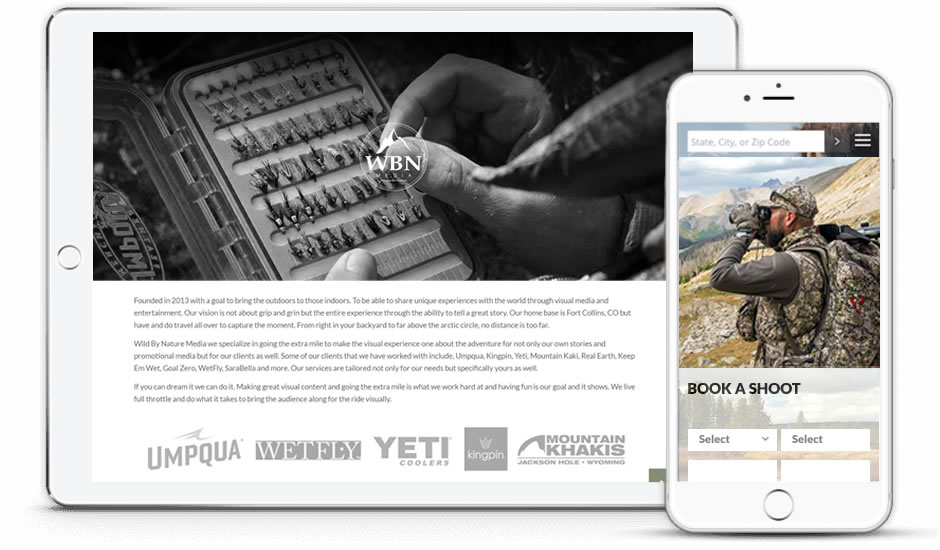
  • The right image is worth a 1,000 words especially when it comes to conversions on your landing page. Use on-brand images that evoke emotion and increase the tangibility of your product or service. For example, using an image of real people enjoying the benefits of your product or service is more effective than an unbranded, impersonal stock photo. Because Google can’t “see” images, adding alt text or image titles helps the search engine recognize and categorize your image. Lastly, make sure your image is a high quality because no one likes a blurry photo.
  • Headline
  • Most people will spend a short time on your landing page, even when you’ve spent hours writing 500 words of copy. Landing pages are meant to be straightforward. Your headline needs to grab a visitor’s short attention span. In a few words, tell your visitors what benefit or what value they can expect from converting. Create a compelling headline, but be clear and concise.

Copy

  • Once you’ve piqued your visitor’s interest with an effective headline, the body copy of your landing page is where you elaborate the benefits of your product or service. Keyword research should guide your word choices, but keep in mind that you still want to be brief. You can break up the copy by using headers and bullet points. This makes it easier for the visitor to know what’s important. Remember to ask yourself: how are you going to solve your potential customer’s problem? What can you provide that your competitors can’t? Another way to provide value to visitors on your landing page is by sharing a customer testimonial or a case study that support your claims.

Call-to-Action

  • Last, but not least is the call-to-action or CTA. This is the part of your landing page that tells visitors what they should do to convert. CTA’s are usually made in the form of a clickable button. Basic examples are: “Buy Now” or “Start Your Free Trial.” When choosing the best CTA for your page, it’s essential to test different colors, where the CTA is placed and CTA copy to determine which one gets the most conversions.

A landing page can have more components, but not all are necessary. When creating a landing page, the most important thing to have is one single goal. It eliminates any chance of distraction that would prevent your customer from converting.

The REAL reason why you need a landing page…

A landing page can guide your potential customer to the next phase of your digital marketing strategy. It can be used to promote a campaign, provide an offer or capture contact information— moving potential customers down your conversion funnel. It depends on your objectives and audience. If you want to increase the number of webinar attendance/sign-ups by five percent, you’ve got yourself a landing page goal. After running your first campaign, you can experiment with changing one aspect of your landing page (i.e. title, call-to-action, etc.) to refine your strategy.

With a thoughtful landing page, you learn more about your audience and what they’re looking for when it comes to your brand, product or service. You can take these new discoveries and apply it to your business strategy.

With the right branding, web design and marketing strategy, you can boost your business’s digital marketing efforts.

Contact TBI and find out how we partner with you to accomplish your business’s goals.