What’s your personal brand?

What exactly is your personal brand?

Simply put, your personal brand is how others perceive you. It’s an outside snapshot of what you value on the inside. A personal brand isn’t a mask you wear around others, and it’s not something that’s created overnight. It takes consistency and time to make an image stick at work and in the world. And to create a winning personal brand, you must understand your values and how people see you.

The first step to creating your personal brand is to take inventory of what is, and what isn’t, working for you. Ask yourself:

How do people experience me? How would people describe your personality and behavior on a normal day?

What traits do I need to keep and elevate? List out your strongest positive traits, ones that would make a big impact on your life with just a little more oomph. Maybe you love to teach, are a great communicator, or are the most reliable person you know.

What behaviors do I need to get rid of? Maybe you’ve always skidding into the office five minutes late or have a hard time accepting compliments. Making simple tweaks can really improve your personal brand.

What are my talents and values?

Now, it’s time to dig a bit deeper. Think about how you’re built, and what matters the most to you:

How am I wired? Some people are built to create, others thrive on tough physical work, and some find fulfillment as a coach, consultant, or humanitarian. make a list of activities that make you come alive.

What do I want to be known for? This question isn’t meant to create a lofty and impossible goal. It’s supposed to reveal the core of who you really are. If you love business, maybe you want to be known as an incredible team builder.

How do I want to be perceived, and what actions should I take to create that perception? If leadership matters most to you, you might want to be perceived as a team player. To be perceived as a team player, you need to take actions that support and serve your team.

How do I express myself in other ways? The way you dress, walk and talk are all ways you express your values. Do you smile? Do your clothes fit well and represent your industry? Do you speak with confidence and kindness? These are all cues helping—or hurting—your personal brand.

Get feedback

Invite your friends, peers, and anyone else who knows you well to speak about your current personal brand. You’re going to have blind spots pointed out, but this is good. You’re also going to learn what people appreciate about you. The point here is to get an idea of how people experience you (your brand).

Once that’s done, it’s time to create a new vision for your winning personal brand. Ask yourself:

What do I do best?

What are my beliefs? What do I stand for?

What are the results I want to produce?

What does my personality bring out in my relationships and work?

These questions go one layer deeper to help you discover what really motivates you and what you want to express to the world.

Sharing your personal brand

All this work to create a personal brand won’t matter if you don’t share it with the world. Here’s how to communicate what you’ve learned about your values, beliefs, strengths, and character with the people around you:

Be yourself – If you try to be a knock-off of someone else, you rob the world of your unique talents, mission, and purpose.

Take action – Put your values into practice. Start taking steps that line up with who you want to be. Come to work a few minutes earlier, and don’t complain about it. Compliment your team on their drive and enthusiasm.

Show (and tell) your brand – Don’t be obnoxious, but you want people to know what you’re all about. Naturally introduce those facts about yourself, your values, and your skills in conversations over time. Live them out. Walk your talk.

Keep maintaining and growing your brand – Do as much as you can to live and work in excellence. Continue learning through books, classes, and podcasts. Invest in your relationships with peers and mentors, and take care of your health.

Developing your character and personal brand is a lifelong journey. And this is just the beginning!

Courtesy: DN

Competitor Geofencing Advertising

Geofencing advertising allows you to target people near your business and entice them to visit your store. It’s an effective way to get people in your store that weren’t planning on visiting originally.

But what about people who are near or visiting a competitor’s store? How can you get them to visit your business instead of the competition?

With competitor geofencing advertising, also known as geo-conquesting, it’s possible to drive those leads to your business.

On this page, we’ll discuss the basics of competitor geofencing advertising and four tips on how you can successfully implement it into your marketing strategy. To learn more about how your custom geo-conquesting plan can drive valuable leads for your business, call us today at 765.398.0439 to speak with a strategist.

Let’s get started!

Geofencing is a location-based targeting system that allows you to reach the right people at the right time.

Geofencing targets people within a set, invisible fence. When users enter the fence, it triggers a notification, ad, or text message. If users are actively using their device, they will see it.

This strategy allows your business to send promotions, deals, and more to your audience. It’s a way to convince your target audience to come visit your store, especially if they weren’t planning on visiting.

Though geofencing is primarily used on mobile, it can also be used on tablets and desktops.

Geofencing is a great strategy to get leads in the door. With geo-conquesting, you can take it a step further and get leads to choose your business over the competition.

What is geo-conquesting?

Geo-conquesting operates the same as geofencing, but instead of the “fence” being around your business, it goes around the competition. This strategy allows you to target people who frequently visit a competitor or are in the area of the competitor’s business.

It may feel like geo-conquesting poaches business from the competition, but it ultimately comes down to a better advertisement strategy.

Imagine you’re walking down the street and you see two fliers posted on a pole for coffee shops. Coffeeshop A, which is right by the pole, advertises their great atmosphere and friendly staff. Coffeeshop B, which is two blocks away, offers $1 coffee if you take a photo of the flier and show it when you order.

Which do you think people are more likely to choose?

In this case, people who see the poster are likely to choose Coffeeshop B because they offered them an awesome deal. Even though Coffeeshop A is right nearby, the customers are willing to walk a bit further to get a better deal.

Coffeeshop B didn’t “poach” the competition, but rather, offered a better deal that led the consumer to choose their business.

This same school of thought applies to geofencing. Instead of posters, you send push notifications or text messages. The goal is to offer these users something better than your competitors.

For instance, McDonalds can geofence places like Wendy’s and Burger King. These are both big-name burger joints that people who want a burger will frequent. If someone is near a Burger King, they may get a push notification about a deal McDonald’s is having to get them to visit their business.

Geo-conquesting is a great way for you to attract valuable leads to visit your business over your competitor’s business. It allows you to target your audience based on places they congregate frequently using past locations and real-time proximity targeting. This method helps you steer leads towards your business.

4 competitor geofencing advertising tips

If you’re ready to start using geo-conquesting, here are four tips to get you started.

1. Know your target audience

If you want to run a successful geofence competitor advertising campaign, the first step is to research your audience. You must know your audience well to effectively target them.

2. Know your competition

Your competition is the most important thing to know, next to your audience. Understanding your competitors gives insight into who you should target.

It’s crucial to know where your audience goes beside your business. Not only does it help you better understand your audience and how they interact with that business, but it provides you with the opportunity to understand your competitors better.

Focus on competitors that are within a four to five-minute walk or drive. You don’t want to target competitors that are 15 minutes away because it won’t be effective for your business.

Researching your competition helps you see where your audience may prefer a competitor over your business. It’s also an opportunity to discover what your business has to offer that the competition does not. You can market your unique benefits to appeal to customers and get them through the door.

3. Target middle-ground and loyal customers

As you shape your geofence competitor advertising strategy, it’s best to focus on loyal and middle-ground customers.

Loyal customers are people who frequent your business. Out of all the competitors, they visit your business the most. They may still visit other competitors’ stores, but overall, they prefer your business.

For example, someone may frequently visit Dunkin’ Donuts for their morning coffee and breakfast. They might stop at Starbucks or McDonald’s occasionally, but generally, they prefer to visit the Dunkin’ Donuts chain.

With loyal customers, you can increase their loyalty by targeting them on various occasions when they visit a competitor. You can send them a coupon or promotion to encourage them to come to visit your business.

Since they already favor your business and are relatively loyal to your company, they are more likely to leave the competitor’s place and visit yours.

The second type of customer you’ll want to target is the middle-ground customer. These are people who don’t have an affinity for any one place. For instance, they may go to Dunkin’ Donuts, Starbucks, McDonald’s, or local coffee shops to get their morning breakfast because they don’t frequent one coffee shop.

With these customers, a good deal can get them to choose your business over the competition. If you’re offering a deal, but your competitors aren’t, customers are more likely to select your business because you’re offering them something. At this point, the customer is looking for the best deal rather than selecting a business they like the best.

Dunkin’ Donuts actually launched their own geo-conquesting campaign. Upon running this campaign, they found that they attract customers who were loyal and middle-ground.

This showed that it is challenging to market to people who are already loyal to another brand. They don’t have any motivation to choose a different business because they are already loyal to another one.

Instead, it’s best to focus on those who are loyal or have no loyalty. They are the ones who are most likely to take advantage of geofencing promotions.

4. Make your content compelling

Once you know who to target and where to target them, the next step is creating compelling content that gets them in the door. You must give your audience a reason to pick your business over the competition.

Your content, whether it’s an ad or a push notification, must be compelling. You must show your audience why your business is a better option than the competitor. Highlight unique and important aspects of your business to further show your business as the best choice.

You can look at unique features of your business that your competitors don’t have. It can be benefits like shorter lines, cheaper prices, a friendlier atmosphere, or special deals. These are all concepts that can convince someone to choose your business.

By creating compelling content, you’ll attract more leads to your business.

Imperfection – the new perfection

Perfection: Something way too many people spend time stressing over and striving for, but what is perfection and why do we work so hard to achieve it?

In truth, imperfection is perfection in its truest form because when you get right down to it there really is no such thing as perfect.

There is only the best, being the very best you can be and always striving to beat your last best.

Perfect is what you make it and people are realizing that we all have flaws and we should embrace them as part of who we are.

Why perfection is not reality?

There really isn’t any such thing as perfection as we are all made different.  It is simply something that looms over us all. A belief that we should be flawless. Our fear of inadequacy leads to these insecurities.

Once we have accepted that we all have flaws and that it’s normal, the truth is that perfection simply doesn’t exist.

Being imperfect is perfectly human
We all have flaws and recognizing this can be the difference between happiness and fulfillment or feeling insecure.

You are not alone
When you realize that others out there might be going through the same thing as you it motivates us to do better, be better, keep going, and that you are going to make it.

Perfect is so boring
The best moments in life occur when we are trying to overcome obstacles and succeed in doing so. If everything is “perfect” we have nothing to strive for. Embrace the imperfect.

We need the bad to accept the good
If nothing bad ever happened to us how would we know the joy when good things come our way. We would be a world full of ungrateful people who don’t appreciate the effort and work put into something because everything would be too easy.

Imperfection jolts us towards greatness
When we find that we aren’t very good at something, it makes us want to get better. It makes us set goals, and work harder.

Imperfection allows room for growth
Imagine if everything you did you excelled at on the first try, eventually, you would stop trying anything new because every outcome would be the same. Without challenge, there is no growth and growth is what we need in life to be completely fulfilled.

When you accept imperfection as perfection you’re allowing yourself the opportunity to succeed.
You take away the pressure and the stress. You gain the ability to focus on the goals and tasks at hand without the voice in your head telling you You’re not good enough.

Imperfection is real. Perfection is not.
Our world was built off mistakes and trial and error, without them some of our greatest discoveries may have never been made.
Keep going, never quit, and continue to be perfectly imperfect.


Geofencing – Your Ultimate Guide

What is Geofencing?

Geofencing is about creating virtual geographic fences around physical locations for targeted mobile advertising.

Look closer, though, and you’ll find that geofencing is far more sophisticated and even more rewarding. It allows brands to understand how their customers behave in the physical world, how often they visit the neighborhoods where their stores are located, and how long they stay in those areas.

Geofencing (also known as “mobile geofencing”) is the application of defining a set geographic perimeter around a location. Oftentimes the output of this method is to prompt an advertisement based on location data signals derived through a mobile phone. These alerts are triggered when a mobile device enters the radius around a pre-established point of interest on a map and users have opted into the app’s location services. Geofencing is most often used in advertising to send an ad to a user through an app. This can be in the form of a promotion, sale, or a simple reminder to drop in. Marketers can even create a geofence around a competitor’s location so a customer will receive an ad when they get close to their store. This type of geofence is called geo-conquesting.”

How Geofencing Creates Better Ads
Mobile currently represents more than two-thirds of all digital ad spending, and marketers continue to invest; in 2021, spending is expected to top $117 billion, eMarketer reports. Increasingly, brands are looking to geofencing technology to help them create more targeted and effective ads.

Geofencing isn’t particularly new, but as brands have evolved their mobile advertising strategies to better reach potential customers wherever they are, this marketing tool has become invaluable. By leveraging geolocation — the geographical location of devices connected to the Internet — geofencing allows marketers to create virtual boundaries around brick-and-mortar business locations (geofences), and deliver mobile ad messages when consumers enter them. The ultimate objective of geofencing is to provide value through mobile advertising — and one of the best ways to do that is by sending messages that are immediately useful to consumers.

WiFi and GPS are used to alert marketers when a mobile device enters the defined perimeter. The location data signals then trigger an email, text, app, or media ad notification. For the consumer, all of this results in some form of promotion, like a sale or a simple reminder to drop into a nearby store. The location-specific message is relevant to where the consumer is at that very moment, which enables your potential customer to take immediate action.

In short, with geofencing you can:

  • Target a hyper-specific area
  • Deliver relevant media
  • Eliminate waste by targeting specific areas
  • Reach customers in real-time

Geofencing in Action

Imagine your marketing goal is to increase foot traffic to your newest restaurant location. You can use geofencing to set up a boundary around the neighborhood in which your business is located. When consumers enter that virtual fence, you can serve them a mobile ad for your restaurant, along with your address and an exclusive offer or limited-time discount. You can even encourage users to download your mobile app and peruse your menu or additional deals.

Whether you’re launching a new menu item, promoting a seasonal special, trying to increase your lunch business, or simply trying to expose more locals to your restaurant, geofencing empowers you to achieve your mobile marketing objectives. Its value extends to retailers, big-box chains and department stores, coffee shops, grocery chains, and virtually any kind of physical business. Setting up a geofence around the boundaries of a mall, for example, can be useful when you want to attract customers to a sidewalk sale or alert them to a new store opening. Once mobile users enter your predetermined boundary, you can serve them that targeted messaging.

The Role of Geofencing in Conquesting

The advantages of geofencing aren’t limited to brand and product promotion. This same technology can also be used to create a geofence around a competitor so that a customer receives an ad for your business when they get close to your competitor’s store.

The objective here is to persuade them to come to your business rather than go to a rival’s. If a customer is nearing a competing clothing retailer, for example, you can serve them a product coupon for your store and remind them that it, too, just steps away. This type of geofencing is an ideal way to drive foot traffic to your business

The Future of Geofencing

What does the future of geofencing hold for marketers? Watch for increased personalization. One of the key advantages of this technology is that it facilitates the creation of customized ads built around consumers’ immediate circumstances. When a consumer crosses the virtual boundary, the opportunity to personalize ad messaging begins. Studies show that 63% of consumers now expect personalization when they receive special offers, so it’s important to customize yours.

The ability to cater your messaging to your audience’s real-time needs

  • by offering discounts and promotions related to their physical location
  • is invaluable when it comes to providing a valuable digital marketing experience.

The more that marketers tailor their call to action for consumers, the better your chance of boosting acquisition and retention while also building brand loyalty and affinity.

To learn more about TBI Digitals’ geofencing marketing platform contact us at info@tbiadv.com.

2022 Design Trend – New Naturalism

After nearly two years of living under the shadow of a global pandemic, many elements of our lives have changed. And as we begin a new year, so much remains uncertain. While a year or two ago, brands reacted to the pandemic and its associated social distancing, mask requirements, and other behavior changes with cautious, […]

12 Branding Trends You Can Expect in 2022

The significance of branding has increased multifold in the last few years. With the advent of digital marketing, the visual feel of the brand and its reach have become vital. Companies are getting more and more avenues to showcase their brand, and they want to capitalize on these opportunities. But for this, they need to ensure that their branding is in the best possible shape.

An important and useful way of bettering your brand is to keep a tab on the latest branding trends. Unlike previous times, these trends change quite quickly now. Therefore, all firms need to stay on top of these trends and make the most out of them. The brands that cannot follow these trends may get an obsolete feel to them and garner negative perception of users. Hence they should take up rebranding exercises from time to time. To help you in this, we have compiled the list of expected branding trends for 2022:

  1. Logo Adaptability

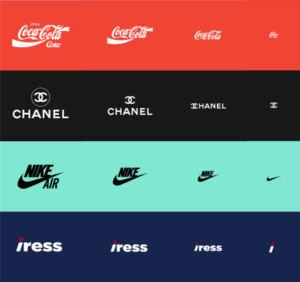
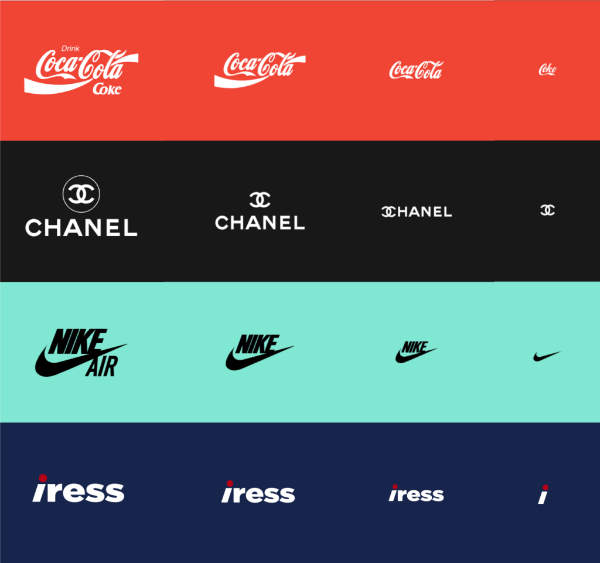
    Many brands have realized the importance of having a logo that can be easily scaled up or down and used in a variety of ways. Gone are the days when logo’s used to have fancy imagery and detailed graphics. With digital media being the prominent marketing medium, brands want to ensure that the logo looks neat and clean even when scaled down to use in a social media post. Another trend in logos that we can expect is shape-shifting logos. For this, companies will create one master logo and then have different versions of it depending on the application of the logo. So for a print ad, we might see the whole logo, while for Instagram stories, we may just see a logo version stripped down to a simple brand element. This also provides a variety to the brand’s visual identity. Many big firms have already started taking steps towards such shape-shifting logos.And if you need a little help with creating top-quality logo designs, TBI DIGITAL can make your life a lot easier.

  2. Keeping it Simple
    Minimalism is a designing trend of the decade, and we can see its effects on branding, be it the visual identity or the messaging. Users want direct communication and want to put it in minimum effort to understand a brand. On the other hand, the brands need to adhere to these customer trends and make sure that they do not beat around the bush and communicate with clarity. This is why we are seeing the visual identity of so many firms going very bland. They are shunning cursive font types or other visual elements. Instead, the logos are becoming increasingly simple wordmark logos with a strong and simple typeface. This makes the application of the logo easy and eases the effort customers have to make to engage with your brand.
  3. Getting Nostalgic
    While one prevailing trend of branding in 2021 will be about being modem and sleek, one more trend that we will see is about brands going nostalgic. This will be especially in the case of brands having decades of market presence. This is a subtle way of reminding the users that they have been there for ages. One brand that has already started doing it is Burger King. It has modified its present logo, which had bright colors and a shine, and changed it to a flat not so bright colors logo. Through this, they are instilling a notion of the brand being natural and evoking the nostalgic feeling of the brand. By the next year, we will see more brands, especially in the B2C sector, shifting to their old branding styles for a while as this will generate a strong emotional response in the users, and they will feel a tighter bond with the brand.
  4. Importance of Visual Content
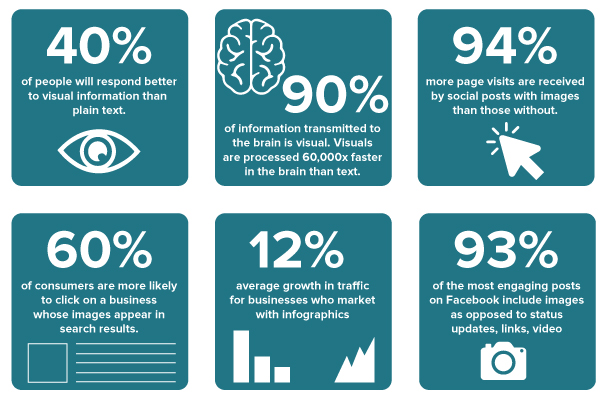
    A picture says a thousand words and when thousands of such pictures move at a speed of 24 frames per second to make a lovely video, imagine the amount of content you can communicate. The attention span of users is quickly depleting, and they do not prefer to read long texts. With the advent of high-speed-powered mobile devices, users have started consuming content on these devices. Given their size, it is increasingly difficult for users to read long articles on them. But if the same content is presented in an image or infographic or even a video, the users will be happy to spend a minute or so and gather the information. Hence, brands need to realign their content generation and marketing strategies to churn out more visually appealing content with subtle marketing. This would work better on all digital mediums, including social media.

  5. Synchronized Social Media Effort
    Social media marketing is not something new, but we can expect to see brands trying to exploit the most out of social media platforms. After the initial apprehensions, many social media channels have gotten prominence, be it Facebook, Instagram, Twitter, Whatsapp, and even TikTok. Given the amount of time people spend on social media daily, it has become a hotspot to attract leads or customers. Initially, brands would have just one strategy for all social media handles. But now, with social media saturation, they need to have a separate strategy for all mediums. But at the same time, they should also not be random. Hence the trend of a synchronized social media plan and execution will be on the rise in 2022. Content, posting frequency, audience engagement, and even paid ads plan will vary for each social media. Having official hashtags, exclusive online communities, or message boards are some strategies that brands need to work on. Smarter brands will also start deploying nodes to attract customers directly to their sales funnel from social media.

  6. Topical Marketing
    A trend that is on the rise, Topical Marketing will soon reach its maturity by next year. Already we are seeing smart brands pick up current affair topics and using them for branding. Such a form of branding has a lot of advantages. It helps the brand look lively and fresh. It also provides avenues for users to engage with the brand. The marketing team does not have to go around looking for content as they can get it from their Twitter feed or latest news. However, they need to be smart about utilizing it as there have been cases where topical marketing has created a controversy for the brand. A good way to avoid this can be setting out guidelines and having a set tone and values for the brand. Based on this, the team can utilize the latest topics for enriching their branding.
  7. Being Inclusive
    In today’s age, no brand can make the mistake of not being inclusive. Over the years, so many brands have received backlash for missing out on inclusivity, and then they had to reform themselves to brand themselves as an open and caring brand. Inclusivity can be in the form of color, religion, race, sexuality, or anything that can offend people. With social media, any bad campaign can go viral in no time. People’s tolerance levels have also decreased a lot, and they take offense very quickly. Hence you need to deep root inclusivity to the foundation of your branding strategy. Use images that have a variety of people. For the sake of exclusivity or targeting a specific audience, do not make the mistake of ignoring inclusivity. Victoria’s Secret, a colossal brand, also had to give in to the pressure and rebrand themselves by going for models representing body positivity.
  8. Represent a Cause
    The woke audience of social media is on the rise. Riding on the prevailing trend of being inclusive, we can witness in 2022 is about brands taking up social issues. This is not something unheard of. All major brands have their foundations or other tie-ups through which they execute noble deeds. But now, the age is going to come where marketing teams will devise branding strategies that make the brand look like a champion in a particular cause and at the same time attract customers based on that. We will see big campaigns, some with subtle marketing and some with direct marketing, about how a particular brand cares for an issue and is helping make the world a better place. Sustainable and eco-friendly products are an entire market sector that will see a huge push due to this trend. Even now, brands are working for causes like climate change, saving biodiversity, afforestation, etc.


  9. Make Brands Human
    There is a difference between brand communication and brand talking. Users now prefer when the brand talks to them rather than throwing out marketing messages. Hence the conversational style of messaging is on the rise. Brands want to become as human as possible and establish a strong connection with the users. For this, the marketing teams are coming up with dedicated campaigns, especially on social media. User engagement is a critical aspect of this. Gone are the days when you posted something on social media and did not care about the comments it received. Now brands have started responding to almost every comment on their post and engaging with users. This helps in portraying the humane aspect of the brand and connecting with customers like peers. If you can throw in a dash of humor, it can quickly break the ice and make your brand more approachable. While some smart brands have already started doing this, we will see this trend spiraling by early 2022.
  10. Leverage Technology
    In 2022, you can ignore technology at your own peril. This is true even in the case of branding. Technology has been shaping branding for many years, but in some time, we will see how brands are using technology to stand out from the competition. We are witnessing an explosion of mobile phone applications. Every other B2C brand will now have a mobile app to sell its products. Voice assistants, chatbots, and data analytics are some other technologies that brands are starting to use. The developments of Virtual Reality and Augmented Reality are going to be disruptive to branding and marketing exercises. Brands are now working to offer real-life experiences to people sitting at home. Be it home walkthroughs, apparel, furniture, or even wall paints; users are now given the option to shop without moving out. As a brand, you need to figure out which technologies work best for you and exploit them to the maximum.
     

  11. Data-Driven Influencer Branding
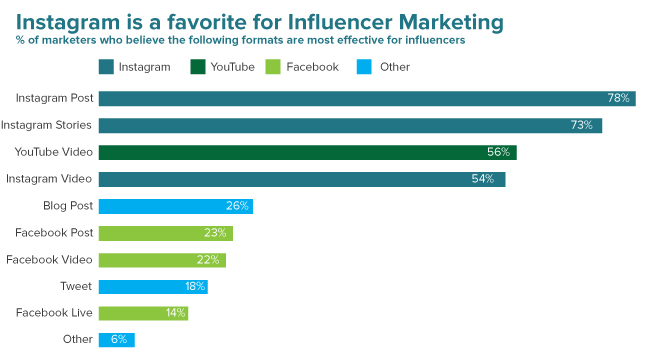
    Influencer branding has opened up new opportunities for both brands and also people as influencers. A practice inherent in marketing is now shaping out to be one of the hottest digital marketing trends. But this trend will also reshape and redefine itself to be driven more by data and become more result-oriented. Influencers will be classified based on their reach, expertise, and sectors. Micro-influencers who have a good hold on a smaller volume of followers will be utilized more for specific branding exercises. Brands will try to quantify the effort and results into influencer marketing and work to make it more cost-effective. Influencers will be made to look like an integral part of the brand, which will help position them as brand ambassadors to attract customers.
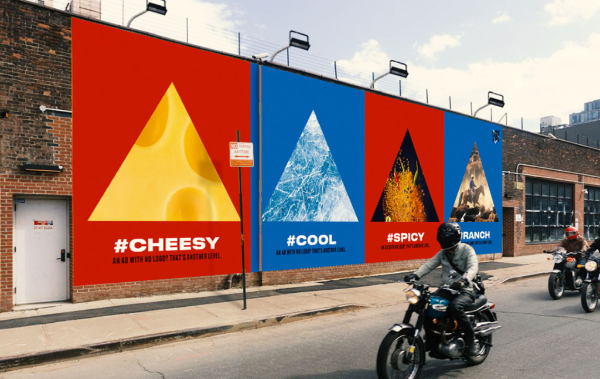
  12. Branding without Brand
    Imagine a huge hoarding that talks about why comfortable shoes are important but do not mention a brand or a logo along with it. This is going to be a huge disruptive trend in 2022. Brands will go so strong that they will carry out what can be termed as ‘branding without brand.’ A few years back, marketers would have thought of this as a joke, but today it sounds promising. The reason for this is an overdose of marketing. Users are tired of brands flashing their products and promises to them. They are on the lookout for solutions and not brands. Brands have started using their unique selling points as their brand image rather than any visual identity to circumvent this. However, the absence of any brand representation can backfire if enough brand recall is not created, and hence we will see this trend more in big brands where they will use their flagship products or services to brand themselves.

Conclusion
While branding trends can keep changing, the above points seem to be major head turners in 2022. The key takeaway for designers and marketers is to keep their branding simple, direct, and precise. This also needs to be represented in their visual representation: the logo, website, print ads, or digital media. At the same time, they need to keep the customer in the center and device their branding to serve them in the best possible way.

Mike Habig is a skilled creative designer, digital marker, digital consultant, web developer, and content creator. With more than 30 years of industry experience, Habig is dedicated to contributing engaging, thorough creative and web design to clients all across the country. email: mhabig@tbiadv.com